Skill Bridge
Connecting Learners With the Right Instructors

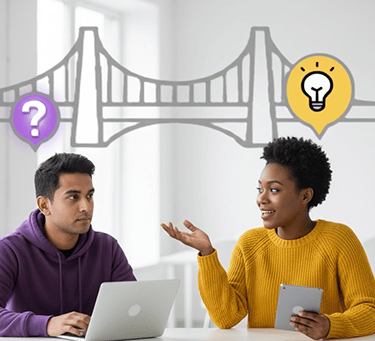
SkillBridge is a platform that designed to help people discover trustworthy and quick access to tutors based on proximity,native language, flexible scheduling,online or in-person, for all levels and all ages.
what is Skill Bridge?
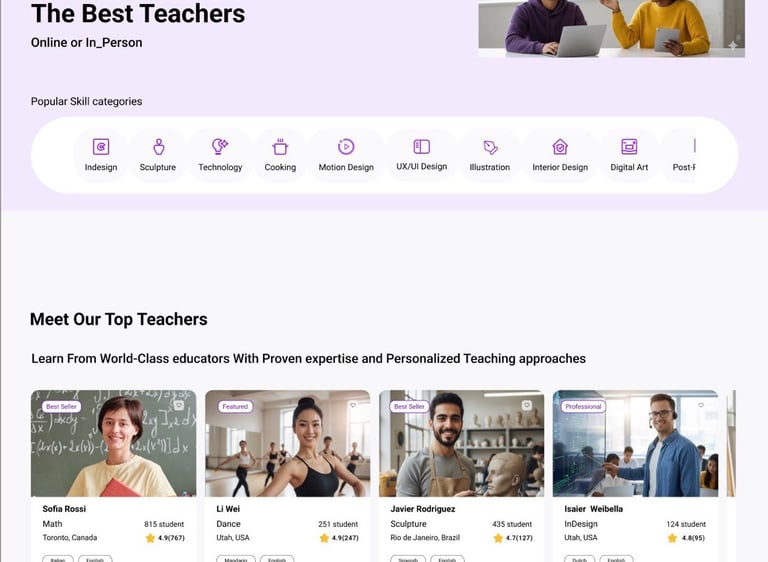
Overview
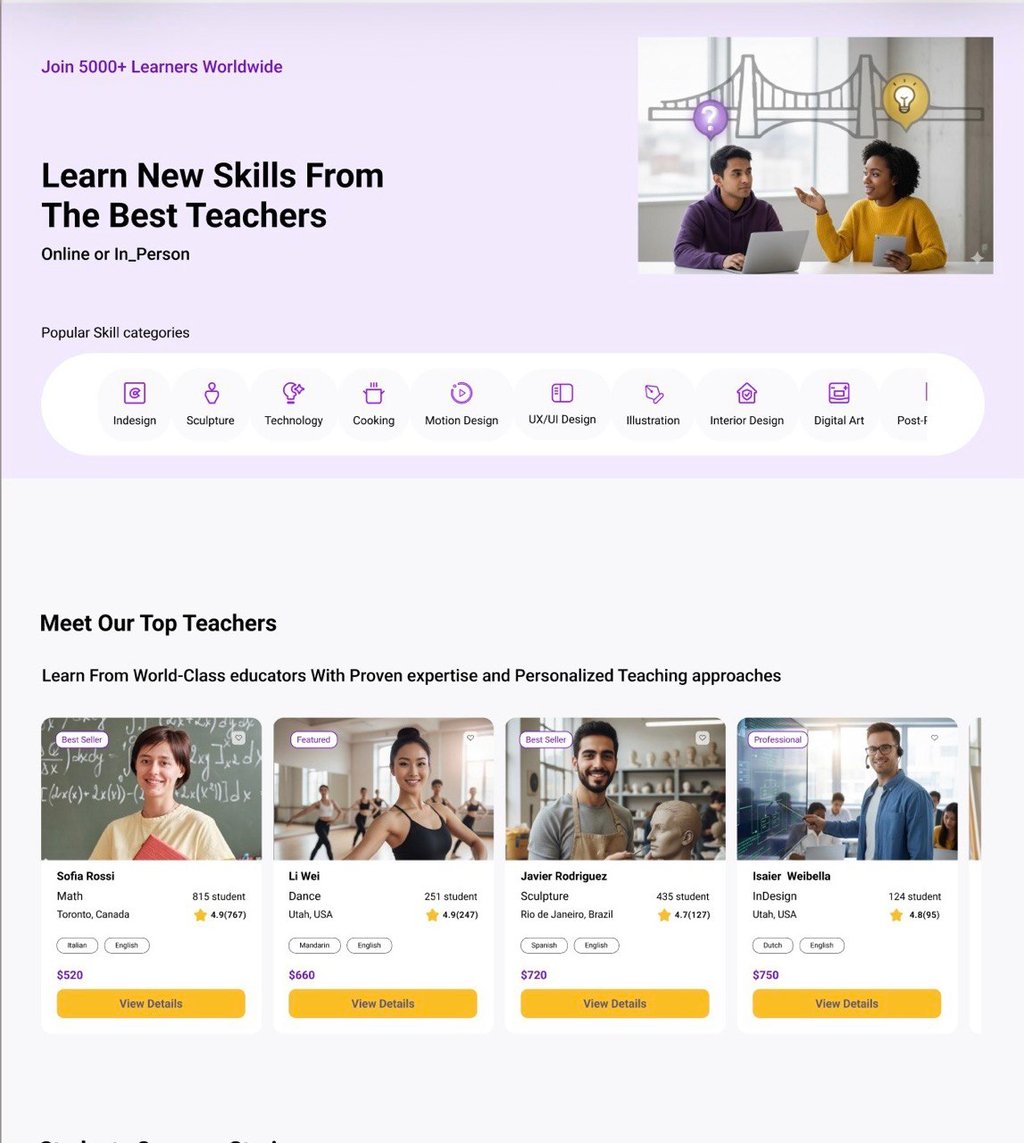
SkillBridge is a skill-sharing platform that connects students with local and online tutors for private classes across various domains such as arts, languages, and technology.
The goal of this project was to design an intuitive and trustworthy platform that simplifies tutor discovery, booking, and long-term engagement.
Project Overview
Problem statement
Goals
Research shows that most people often felt overwhelmed when choosing tutors or classes. They struggled to quickly assess trustworthiness, compare options, and understand pricing and availability. Existing platforms fragmented the experience and increased decision fatigue during the booking process
Role
Duration
Team
Tools
UX /UI Designer
6 Weeks-Part Time
4 People
Figma,Miro,PHotoshop,zoom
Problem Statement
In a competitive two-sided marketplace, low differentiation between tutors, limited trust signals, and a fragmented booking flow reduced successful matches and repeat usage.
Research showed that users often felt overwhelmed when choosing tutors, struggled to assess trustworthiness, compare options, and understand pricing and availability—leading to decision fatigue and drop-offs during booking.
Design a Website for a quick ,Reliable access to local professionals.
Focuses on local,affordable,accessibility.
Generate interest among potential users by a credit system.
THE PROCESS
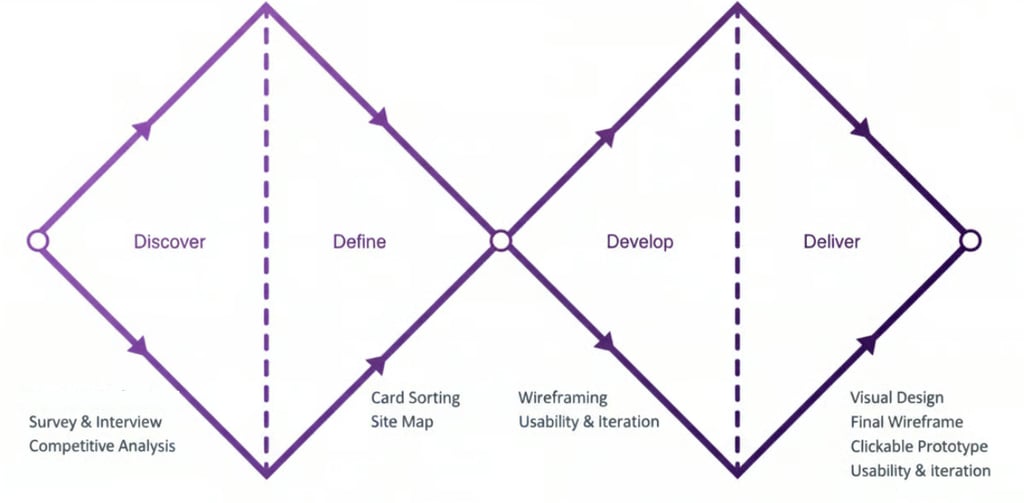
My team of 4 ran a double Diamond method based on the Design Thinking Methodology. It was not a linear path, we bounced between stages as the project progressed.
DISCOVER
DEFINE
DEVELOP
DELIVER
1
2
3
4
Double Diamond process customized for SkillBridge, from discovery to delivery.
Discover
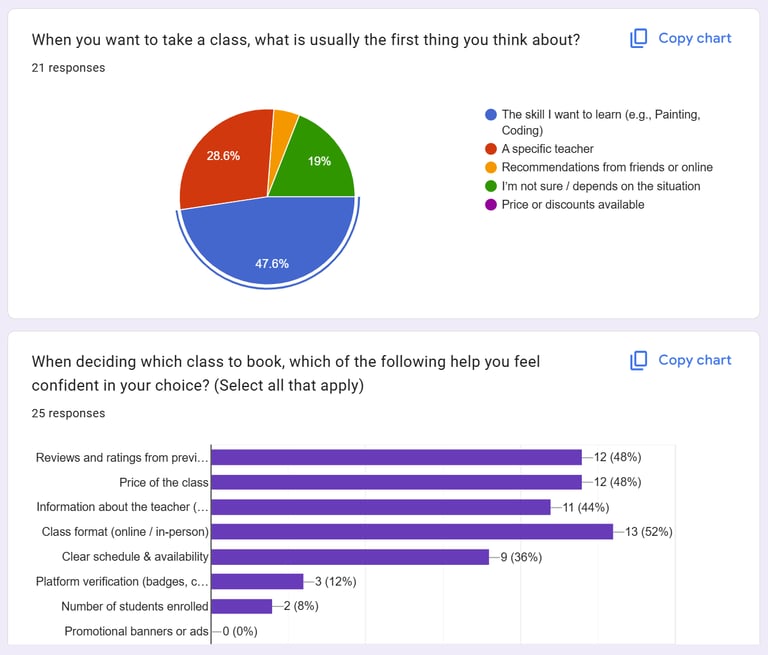
We collected 26 responses from learners who recently took online or in-person classes. Our aim was to uncover how they discover classes, what challenges they face, and what factors build trust and confidence.
Key Takeaways:
Users search for skills first, not tutors.
To decide efficiently, they need key information upfront: price, level, format, rating.
Based on these survey results, we invited 6 interested participants for in-depth interviews to gather qualitative insights for design decisions.
Competitive Analysis
The third step in our research involved identifying successful patterns in current products and missing gaps. We explored different products and narrowed them down to four top competitors: Superprof, Domestika, Wyzant, and Udemy. As a team, we analyzed the good and the bad of each competitor and determined how they present their features.
Platforms like Udemy and Domestika make discovery easy but lack local, one-to-one teaching.
Tutoring platforms such as Wyzant or Superprof are powerful, yet often feel complex and expensive for casual learners.
Trust signals (reviews, badges, verified profiles) strongly influence decision-making.


We conducted our research in two phases:
Phase 1: Survey and Interview (Affinity Diagram)
Phase 2: Competitive Analysis
Survey and Interview